






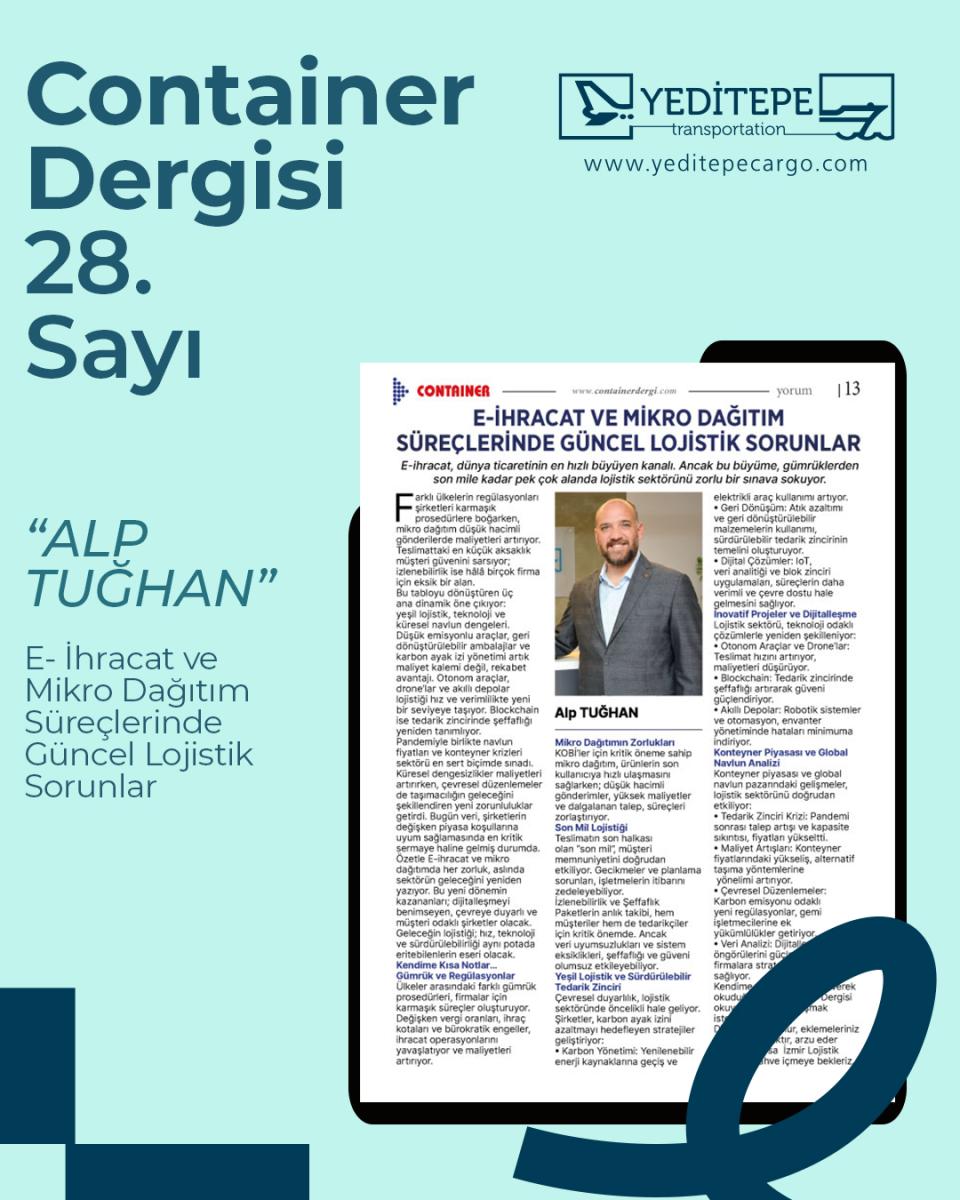
Current Logistics Challenges in E-Export and Micro Distribution Processes
E-export is the fastest-growing channel in global trade. However, this rapid growth is putting the logistics sector through a demanding test, from customs procedures to last-mile delivery. While differing regulations across countries burden companies with complex procedures, micro distribution increases costs for low-volume shipments. Even the smallest disruption in delivery can undermine customer trust, and traceability remains an underdeveloped area for many companies.
Three key dynamics stand out in transforming this landscape: green logistics, technology, and global freight rate balances. Low-emission vehicles, recyclable packaging, and carbon footprint management are no longer just cost items—they have become competitive advantages. Autonomous vehicles, drones, and smart warehouses are taking logistics to a new level in terms of speed and efficiency. Blockchain, on the other hand, is redefining transparency across the supply chain.
With the pandemic, freight rates and container crises tested the sector in the harshest way. Global imbalances increased costs, while environmental regulations introduced new obligations that are shaping the future of transportation. Today, data has become the most critical asset for companies seeking to adapt to volatile market conditions.
In summary, every challenge in e-export and micro distribution is, in fact, rewriting the future of the sector. The winners of this new era will be companies that embrace digitalization, remain environmentally conscious, and stay customer-focused. The logistics of the future will belong to those who can combine speed, technology, and sustainability in the same pot.
Personal Notes
Customs and Regulations
Differences in customs procedures between countries create complex processes for companies. Variable tax rates, export quotas, and bureaucratic barriers slow down export operations and increase costs.
Challenges of Micro Distribution
Micro distribution, which is critically important for SMEs, enables products to reach end users quickly; however, low shipment volumes, high costs, and fluctuating demand make these processes more difficult.
Last-Mile Logistics
The “last mile,” the final link in delivery, directly affects customer satisfaction. Delays and planning issues can damage a company’s reputation.
Traceability and Transparency
Real-time tracking of packages is critical for both customers and suppliers. However, data incompatibility and system shortcomings can negatively affect transparency and trust.
Green Logistics and a Sustainable Supply Chain
Environmental awareness is becoming a priority in the logistics sector. Companies are developing strategies to reduce their carbon footprint:
-
Carbon Management: The transition to renewable energy sources and the use of electric vehicles are increasing.
-
Recycling: Waste reduction and the use of recyclable materials form the foundation of a sustainable supply chain.
-
Digital Solutions: IoT, data analytics, and blockchain applications make processes more efficient and environmentally friendly.
Innovative Projects and Digitalization
The logistics sector is being reshaped by technology-driven solutions:
-
Autonomous Vehicles and Drones: Increase delivery speed and reduce costs.
-
Blockchain: Enhances transparency and strengthens trust in the supply chain.
-
Smart Warehouses: Robotic systems and automation minimize errors in inventory management.
Container Market and Global Freight Analysis
Developments in the container market and global freight rates directly impact the logistics sector:
-
Supply Chain Crisis: Post-pandemic demand growth and capacity constraints drove prices upward.
-
Rising Costs: Higher container prices have increased interest in alternative transportation methods.
-
Environmental Regulations: New carbon-emission-focused regulations are placing additional obligations on shipping companies.
-
Data Analysis: Digitalization strengthens market forecasts and provides companies with strategic advantages.
I wanted to share these personal notes with the readers of Container Magazine, which we always enjoy reading. I hope they are useful—there will surely be additions. And if you happen to have time, we would be happy to meet for a coffee at the İzmir Logistics Fair ☕